
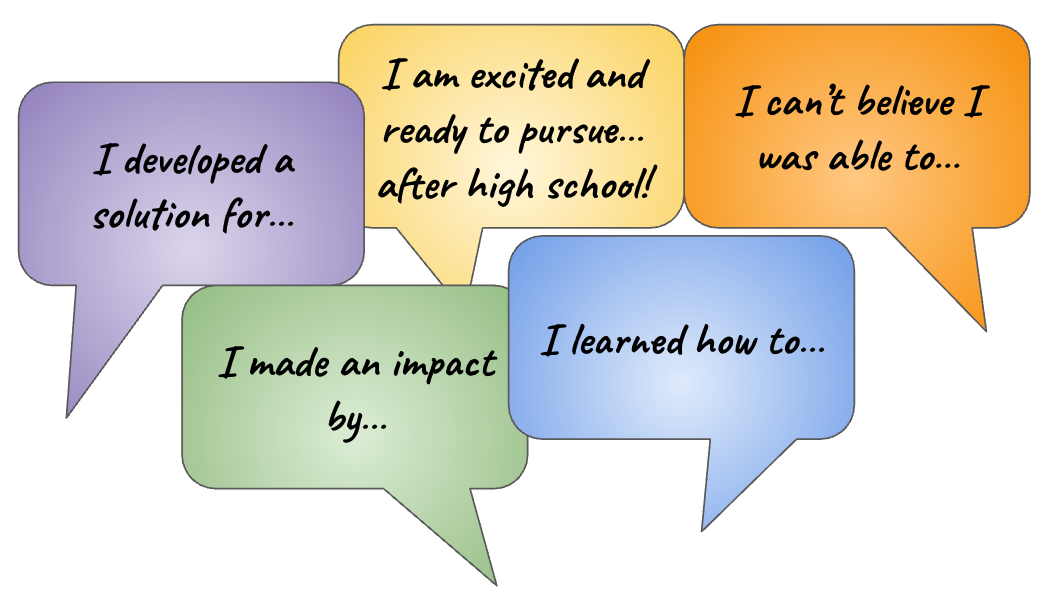
It’s the first day of school in our local district. It would have made sense for my first ever blog post to focus on this exciting launch of the school year. Instead, I’m using this as an opportunity to focus on the “end”, putting a bright spot on our eventual high school graduates. As our seniors are walking through their school doors for their last school year, what are their hopes? What do we envision for them? Will they walk the stage in the spring feeling prepared for the future? Will they look back excitedly and talk about specific experiences that have helped them prepare? What would we hope to hear from them during this rite of passage?
I Already Forgot Everything
At my own college graduation, in order for my family to be able to spot me from the sea of other undergrads in the stadium setting, I sported a bright yellow Batman symbol on top of my dark cap. It seemed to do the trick. Many other students created their own visual identifiers.. I remember this being a fun component of the day and certainly a contrast to the more traditional conventions of my high school graduation when decorating the high school graduation cap was not a thing at the time.
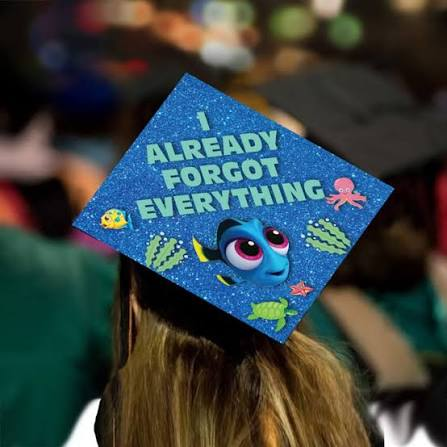
Fast forward 30 years and it is clear that high school graduation traditions have changed with graduation caps commonly being covered with a range of messages and artwork. Some are deeply personal (e.g. images of family) and some are, like my example, simply a way for family to spot them in the crowd. At a June ceremony for a relative, I noticed a student wearing a cap that had the same message as the one pictured, “I already forgot everything.” I initially laughed, thinking of this simply a playful moment for the student. Then, my mind shifted to thinking more about the power of this message. After presumably four years at this institution, culminating in this special moment, their message to the world was, at best, sarcastic, but perhaps more likely a recognition that high school was a disappointment, at least in terms of the academic experience. I’ve since discovered that a template with this same exact message is available through multiple stores and online outlets. I’d still like to think that students choosing to wear this message on their cap are, like the example, just taking a little jab at their school, that they are still leaving high school more prepared academically than when they came in and that they may certainly still be on an exciting path ahead. But at minimum, this is clearly not the message they are choosing to communicate on this special day.
I Got to Research…

I recall a much different set of closing messages when I attended the graduation ceremony for John O’Connell High School (San Francisco Unified School District) back in 2015. That year, we implemented Senior Defense for the first time at the school. This culminating project required all students to engage in multi-month intensive research experience. They crafted their own essential questions, conducted multiple stages of research, and developed conclusions backed by evidence. Their first product was a lengthy research paper followed by a public defense. During this formal protocol, students presented their research for a panel followed by a question and answer session where they went even deeper. I remember from the time the project was first introduced to students to the time they presented, I received plenty of push back from students. “Why are you doing this to us, Rice?” Afterward, sentiments changed as students proudly bragged about what they had accomplished.
At that 2015 graduation ceremony, multiple students spoke. Almost across the board, in addition to more typical expressions of gratitude and hope, students referenced their experience from their Senior Defense. They shared quick notes about their actual research question and process, and gratitude for the overall experience.
While I don’t recall any of the students from this group decorating their graduation cap, I imagine their message would have been something far different from what I saw at my relative’s graduation this past spring.
Imagining the End: I Can’t Believe I Was Able To…
As we are launching the year, how might we build and support a culture of deeper, meaningful learning whereby students both internalize a set of compelling outcomes AND articulate these to others? Where instead of “I already forgot everything”, graduates are sharing end-of-year messages that start more like:
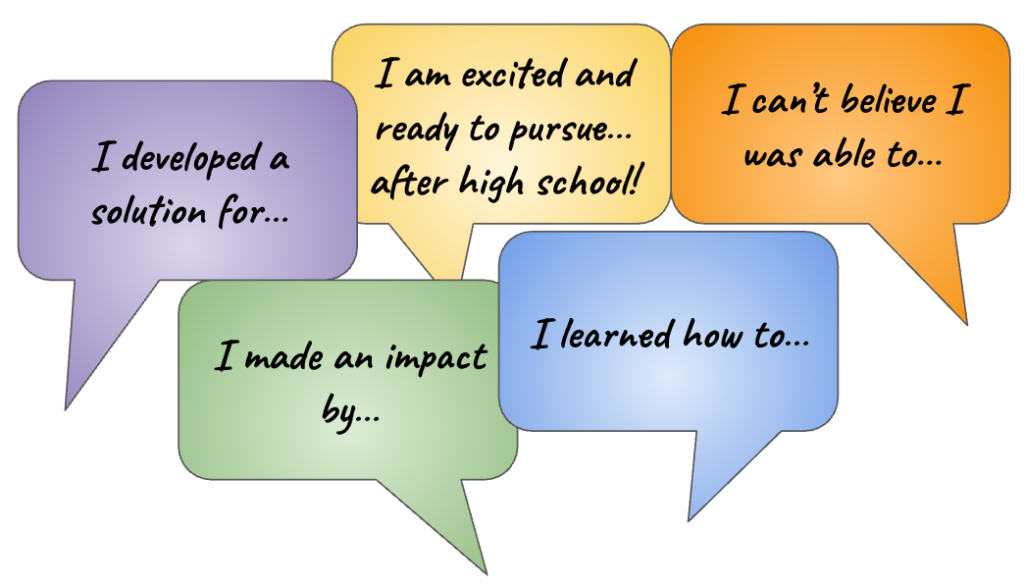
Below are some examples of how schools might shift in this direction…
- Point to the Destination: Increasingly schools and districts have articulated a “graduate profile” that serves as a “north star” for curriculum and instruction. These often feature a set of deeper learning competencies. The “destination” can also include a set of experiences or artifacts that all students will produce.
- Rally Around a Culminating Project: Like John O’Connell High School and many others have done through things like Senior Capstone or Senior Defense, a major common project can be a compelling way for students to deepen and apply academic competencies and finish high school on a strong note. (Note, this should also not be the first time students are being asked to do this sort of deeper project-based work, but it can still serve as a starting point when creating a deeper learning system.)
- Senior Portfolio: This can feature a set of revised artifacts through which students demonstrate certain competencies. It could also include a set of post-secondary readiness artifacts (e.g. updated resume, LinkedIn profile, 5-year plan, 1st Year post-secondary plan, financial plan, etc.)
- Public Demonstrations of Learning: Giving students a space to share and reflect on their learning is an excellent way to help them internalize outcomes. Whether through a formal “defense” or more of an exhibition, students are able to talk about their work with an authentic audience. These events can often have a celebratory component as well. (Though I have found it difficult to fulfill multiple objectives well in one event.)
What are examples of how your school has, by design, supported your graduates to end strong? How are you starting to envision and plan for that now?
Leave a Reply